
Russia has welcomed India's decision to not support the price cap on Russian oil announced by G7 and its allies and offered it cooperation on leasing and building large-capacity ships to overcome the ban on insurance services and tanker chartering in the European Union and Britain to continue buying discounted oil. The offer came as Russian Deputy Prime Minister Alexander Novak held a meeting with the Indian Ambassador to Moscow, Pavan Kapoor, on Friday. "The Deputy Prime Minister welcomed India's decision not to support the price cap on Russian oil, which was imposed on December 5 by the G7 countries and their allies," the Russian foreign ministry said in a statement.

The referendum by the Russian authorities on the annexation of occupied territories of Ukraine was largely seen as a "sham referendum" and has been widely criticised by various countries.

Dalal Street minnows stole the show in 2024, giving handsome returns to investors, helped by a largely optimistic trend in the stock market and impressive retail investors' participation. Analysts attributed the positive trend in the equity markets, where the benchmark indices shattered many records this year, to robust domestic liquidity, strong fundamentals of the Indian economy, and policy continuity.

'We are not asking for incentives, but at least taxation can be aligned such that the rupee tax on consumers remains the same.'

TotalEnergies will acquire 25 per cent shareholding in Adani New Industries Ltd -- the firm that houses Adani Group's new energy business -- for an undisclosed amount, the two firms said in separate statements. "TotalEnergies has entered into an agreement with (Adani Group's flagship) Adani Enterprises Limited (AEL) to acquire a 25 per cent interest in ANIL," the French energy giant said.

A delegation of high-level executives from US public pension funds (non-profit and government sectors) is visiting India next week to assess and familiarise themselves with the investment opportunities in the country. These executives belong to various American states and cumulatively represent $1.8 trillion in assets under management (AUM) invested across the US and global markets. The United States (US) mission to India, which includes its embassy and consulates and the Department of Treasury, along with India's Ministry of Finance and the National Investment and Infrastructure Fund (NIIF), is hosting the delegation.

Trading in the equity market this week will be highly influenced by a host of important triggers, with quarterly earnings from IT majors TCS, Wipro, and domestic inflation and IIP data taking the centre stage in dictating the movement in equities, analysts said. Besides, global factors and trading activity of foreign investors will also drive markets. "We are approaching the first quarter earnings season, with HCL Tech, TCS and Wipro set to report their earnings this week.
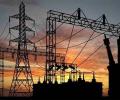
Power utilities may report moderate growth in earnings for Q3FY25. Generation is up 3 per cent year-on-year (Y-o-Y) in Q3 on lower cooling demand and high base, to 429 billion units (BU). Peak demand was steady at 224 Gw in Q3FY25, a 10 per cent decline from the record highs of 250 Gw in May 2024.

About 99,165 electric cars were sold in India in 2024, but electric car penetration -- share of electric car sales in total sales -- was just about 2.5 per cent.

Adani group founder and chairman Gautam Adani and his nephew Sagar have been summoned to explain their stand on the US Securities and Exchange Commission (SEC) allegation of paying $265 million (Rs 2,200 crore) in bribes to secure lucrative solar power contracts. Summons have been sent to Adani's Shantivan Farm residence in Ahmedabad and his nephew Sagar's Bodakdev residence in the same city for a reply to SEC within 21 days.

Among the Sensex firms, Asian Paints, NTPC, Tata Motors, Bharti Airtel, State Bank of India, Larsen & Toubro, Wipro, Tech Mahindra, Tata Consultancy Services, ITC, HDFC Bank and Maruti were the biggest winners. Hindustan Unilever, Infosys, UltraTech Cement, Bajaj Finance, Nestle, Axis Bank, Reliance Industries and HDFC were among the laggards.

Private consumption is back driven by festive spending, and the medium-term economic outlook remains bullish as the innate strength of the macro-fundamentals reasserts itself, the Reserve Bank Bulletin said on Wednesday. Global economic activity remained resilient during Q4:2024 amidst fragile confidence and rising protectionism, said an article on 'State of the Economy' published in the November Bulletin.

From the 30-share pack, Hindustan Unilever, Tata Motors, Axis Bank, Nestle India, Asian Paints, ITC, Reliance Industries, Mahindra & Mahindra, IndusInd Bank and State Bank of India were among the laggards. Larsen & Toubro, Tata Steel, JSW Steel, HDFC Bank, Adani Ports, Kotak Mahindra Bank, Bharti Airtel and PowerGrid were among the gainers.

The US Federal Reserve's interest rate decision, quarterly earnings of corporates and domestic macroeconomic data will influence trading in the equity market in a holiday-shortened week ahead, analysts said. Foreign funds' trading activity, monthly automobile sales data and global trends would also guide market movement this week, they added. Markets would remain closed on Monday on account of 'Maharashtra Day'.

India stares at the risk of an influx of Chinese products as US tariffs on a range of Chinese goods, including solar panels, electric vehicles, lithium-ion batteries, syringes, and steel, are set to take effect from September 27. With higher tariffs reducing China's access to the US market, there is concern that China may divert its exports to other markets, including India, which could lead to potential dumping of goods. This situation could challenge Indian industries, particularly in sectors where competition with Chinese products is already fierce.

Here is a list of Q & As to explain these issues and implications of the US move.

From the Sensex pack, Infosys tanked over 8 per cent after the company reported a lower-than-expected 11 per cent rise in net profit for the June quarter and delivered a shocker as it slashed its FY24 growth outlook to 1-3.5 per cent on delayed decision-making by clients amid global macro uncertainties. Hindustan Unilever, HCL Technologies, Wipro, and Tech Mahindra were the other major laggards. On the other hand, Larsen & Toubro rose the most by 3.88 per cent after it bagged an order of worth over Rs 7,000 crore from the bullet train project.
Reliance Industries on Tuesday said it will acquire a majority stake in California-based solar energy software developer SenseHawk for $32 million (around Rs 256 crore). The acquisition of a 79.4 per cent stake in SenseHawk is part of the conglomerate's aggressive push into renewable energy to decarbonise its oil and chemical-dominated business. SenseHawk, founded in 2018, develops tools for the solar industry to help companies streamline processes and use automation. It had a turnover of $2.3 million in last financial year.

Three companies -- FirstMeridian Business Services Ltd, IRM Energy Ltd and Lohia Corp -- have received capital markets regulator Sebi's go-ahead to raise funds through initial public offerings (IPOs). These firms, which filed their preliminary IPO papers with the markets regulator between September 2022 and January 2023, obtained the observation letters during February 21-24, an update with the Securities and Exchange Board of India (Sebi) showed on Tuesday. In Sebi parlance, observation implies go-ahead to the company to float the initial share-sale.
From the Sensex pack, Bharti Airtel fell 3.42 and Kotak Mahindra Bank declined 3.31 per cent. ICICI Bank, ITC, HDFC Bank, UltraTech Cement, HCL Technologies and Maruti were the other major laggards. Tata Motors, Hindustan Unilever, Asian Paints, Sun Pharma, Nestle, Tata Consultancy Services, Wipro, Bajaj Finance, Axis Bank and IndusInd Bank were among the gainers.

Just because India has outperformed the US markets in a short recent period, it does not mean that this is based on fundamental reasons that are here to stay, points out Debashis Basu.

'A key reason for the strong interest in IPOs has been an increased focus on profitability and reasonable pricing of deals.'

Stocks of Hindustan Petroleum Corporation Limited (HPCL), Bharat Petroleum Corporation Limited (BPCL) and Indian Oil Corporation Limited (IOCL) have more headroom left despite the sharp run in the last few weeks, suggests a recent report from Morgan Stanley. Stocks of these oil refining and marketing companies (OMCs), it believes, are seeing multiples re-rate as investors reassess long-term growth prospects. "IOCL trades at one year forward P/BV of 1.2x, 19 per cent below +1 standard deviation (SD); BPCL trades at one year forward P/BV of 1.5x, near historical averages; HPCL trades at one year forward P/BV of 1.5x, near +1SD," Morgan Stanley said.
Siemens delivered a strong margin performance and also reported high other income to beat consensus in the January-March quarter (Q2) of FY24 (the company's year-end is September 30). In addition, it has opted to demerge the energy vertical with a 1:1 award of shares in the newly demerged entity which will be listed by the end of this year (CY25).

'Investors looking at the next 6-12 months can be certain that the Fed will maintain its easing cycle, and we expect the overall environment to be conducive for fixed income investments for portfolio diversification.'

Among the Sensex firms, State Bank of India, Infosys, Titan, Tech Mahindra, IndusInd Bank, NTPC, ICICI Bank, Power Grid, Reliance Industries and Kotak Mahindra Bank were the major laggards. On the other hand, Tata Motors, Nestle, Hindustan Unilever, Tata Steel, Bajaj Finance and UltraTech Cement were among the gainers.

'You don't need massive industry or huge energy resources.' 'You could start with just 3 or 4 people in a coffee shop and invent the world.'

"Less than two week back, we faced a set of allegations from the US about compliance practices. This is not the first time we have faced such challenges. What I can tell you is that every attack makes us stronger," he said addressing the 51st Gems and Jewellery Award in Jaipur.

Wall Street-correlated stock markets are facing the risk of correction, as Christopher Wood, the global head of equity strategy at Jefferies, conveys to investors in his latest edition of GREED & fear. Rising crude oil prices, which are nearing $100 a barrel (Brent), pose a threat to the global central bank's battle against inflation and have led to a re-evaluation of its exposure to Indian stocks. "The potential for more US Federal Reserve (Fed) rate hikes, combined with the risk that monetary tightening finally bites as regards the economy, remains a risk for Wall Street-correlated world stock markets. "There is also the oil factor. This is why GREED & fear continues to believe the pain trade is down. "Areas in Asia, such as Indian midcaps, which have already done very well, are at obvious risk of some profit-taking," writes Wood.
Speaking at the 8th Asia Gas Partnership Summit in New Delhi, he said India, which currently is world's seventh largest energy producer, 'needs to increase its energy supply by 3 to 4 times within next two decades.'

The last time these two indexes recorded a negative performance on a calendar year basis was in CY19.

'Such big falls are quite frequent these days, so do not try to time this market.' 'Use big dips to accumulate quality stocks.'

'If the Trump administration decides to put guardrails on H-1B visas, that will surely impact both US and Indian firms.'

A day after his appointment as the 26th governor of the Reserve Bank of India (RBI), outgoing Revenue Secretary Sanjay Malhotra on Tuesday said one must understand the economic landscape and do what was best for the economy. "Let me first go, join, understand the turf ... Here it is a different role," Malhotra said, speaking to reporters in front of North Block.
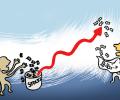
In a dazzling resurgence, foreign investors have graced the Indian equity markets with an influx of nearly Rs 1.5 lakh crore in 2023, fuelled by optimism over the country's resilient economic fundamentals amid shadows of a gloomy global scenario. Experts believe that the positive trend may continue in 2024. This follows Indian equities witnessing the worst-ever net outflow of Rs 1.21 lakh crore by FPIs in 2022 on aggressive rate hikes by the central banks globally after net inflows for three consecutive years.

'If weak indicators persist, there is a risk that India could slip into a prolonged slowdown similar to the one experienced between 2014 and 2019,' warns Debashis Basu.

Finance Minister (FM) Nirmala Sitharaman has presented a forward-looking Budget, reinforcing the government's commitment to 'Reform, Perform, and Transform'.

'Consider 40% to 50% in equities, 10% in gold as a hedge, and the remaining 30% to 40% split between multi-asset funds and hybrid funds.'

'We have to be prepared for the larger disruption that is likely to take place.'

Billionaire Mukesh Ambani on Thursday unveiled the next phase of growth at Reliance Industries Ltd, with retail and telecom worth over $100 billion each, doubling revenues and pre-tax profit in 3-4 years, new energy business becoming profitable by 2031, and core oil and chemical business continuing to be the robust growth engine. The sprawling conglomerate with interests in refining, oil and gas, petrochemicals, telecom, retail, and media is on track to more than double in size before the end of the decade, Ambani, chairman and managing director of Reliance, told company shareholders.
